


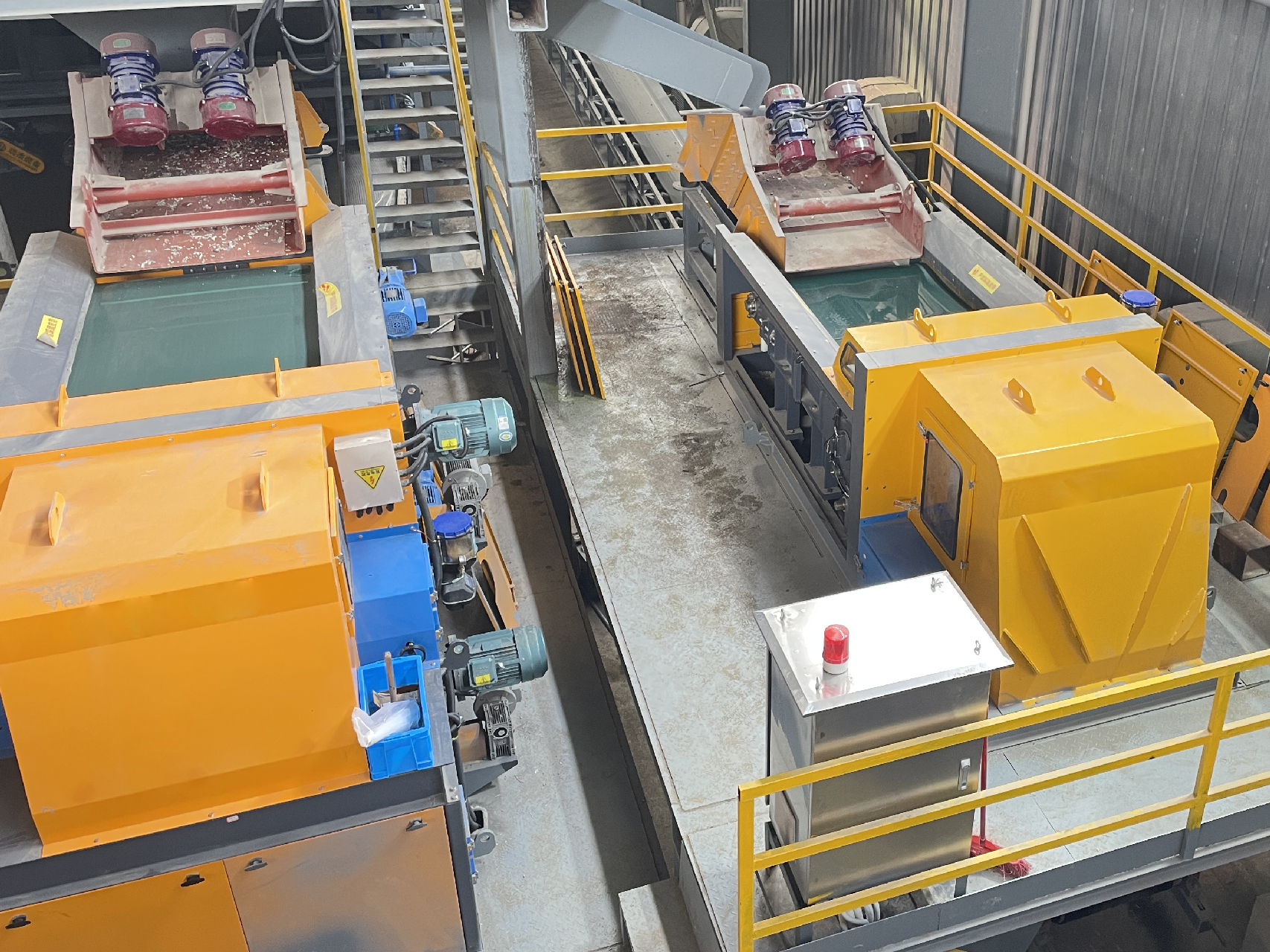
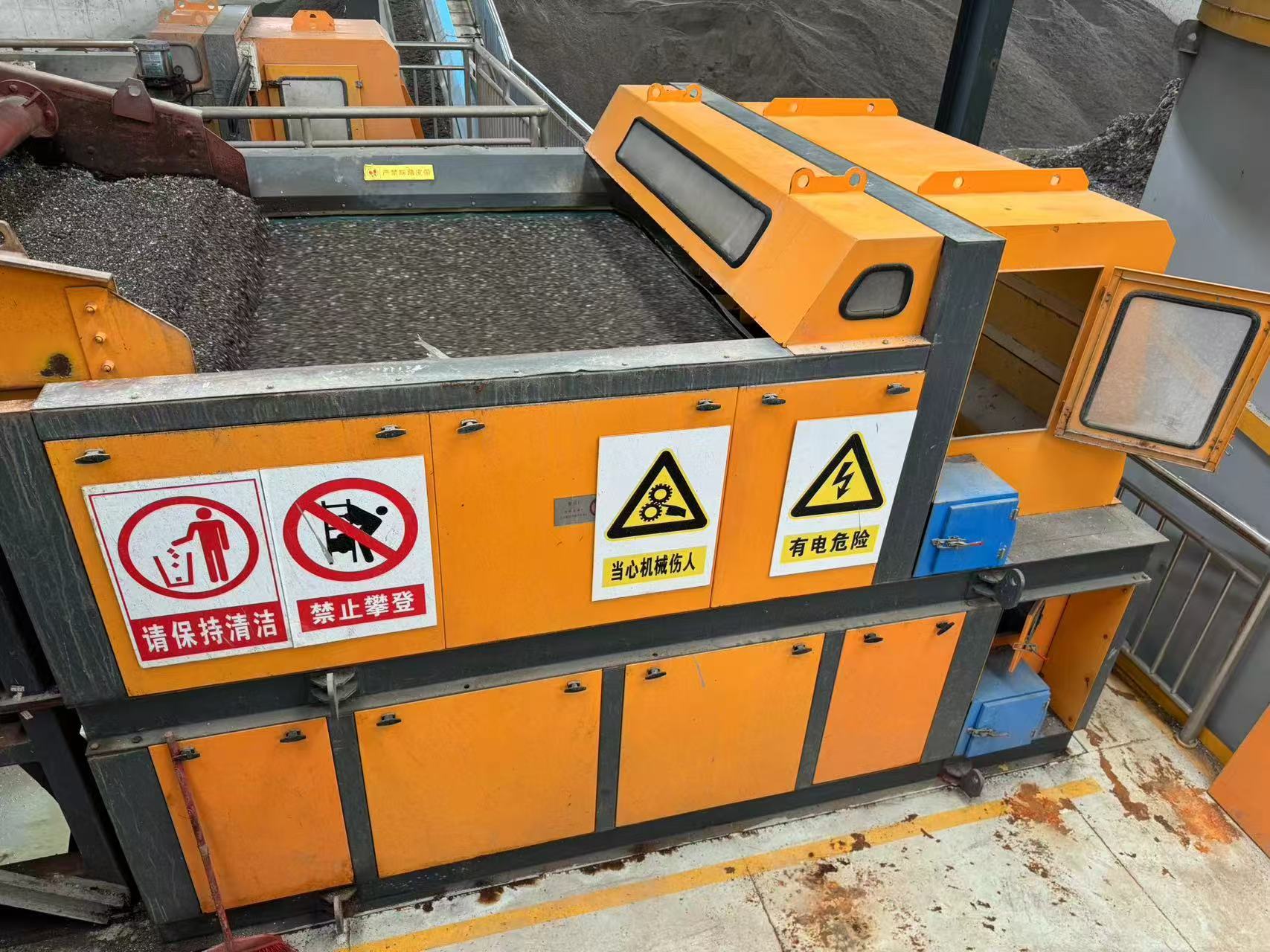
Eddy Current Separator for Non-Ferrous Metal Recovery
Reliable Eddy Current Separation for Complex Recycling Materials
CurrenTek has specialized in the research, development and manufacturing of eddy current separators for more than 10 years.
Our product development focuses on three core priorities:
high recovery performance, optimized mechanical structure and easier maintenance.
CurrenTek eddy current separators are designed to recover conductive non-ferrous metals such as aluminum, copper, brass and other valuable metal fractions from mixed recycling materials.
The equipment can be integrated into both newly built recycling lines and existing plant upgrades, helping recyclers improve non-ferrous metal recovery, reduce valuable metal loss and produce cleaner downstream material.
How an Eddy Current Separator Works
An eddy current separator uses a high-speed magnetic rotor to generate a rapidly changing magnetic field.
When conductive non-ferrous metal particles enter this magnetic field, electrical currents are induced inside the material.
These induced currents create an opposing magnetic force that changes the trajectory of conductive metal particles.
As a result, valuable non-ferrous metals are separated from non-metallic materials such as:
- Plastic
- Glass
- Rubber
- Wood
- Mineral material
- Other non-conductive waste
The separation performance depends on several factors, including material type, particle size, shape, feed condition, conveyor speed and equipment configuration.
For this reason, the separator should be selected according to the actual recycling material rather than only according to nominal processing capacity.
Typical Materials for Eddy Current Separation
CurrenTek eddy current separators can be used to recover non-ferrous metals from a wide range of recycling streams.
Typical applications include:
Zorba Recycling
Zorba contains a high proportion of aluminum together with copper, brass, zinc, stainless steel and other non-ferrous materials.
An eddy current separator can be used to recover the conductive non-ferrous fraction from shredded material after ferrous metal has been removed.
Depending on the required final product, additional upgrading stages may be added after primary recovery.
ASR Processing
Automotive shredder residue can contain valuable aluminum and other non-ferrous metals mixed with:
- Plastic
- Rubber
- Foam
- Glass
- Wire
- Other vehicle residues
Efficient non-ferrous recovery can help reduce valuable metal loss and increase the commercial value of material recovered from end-of-life vehicles.
UBC Recycling
Used beverage cans are an important source of recyclable aluminum.
An eddy current separator can help recover aluminum cans from mixed packaging streams containing plastic containers, steel cans and other materials.
Stable feeding and suitable material preparation are especially important for lightweight UBC material.
IBA Metal Recovery
Incinerator bottom ash can contain recoverable aluminum, copper and other non-ferrous metals mixed with mineral material and ash.
Correct equipment configuration and material size control are important when processing fine or irregular IBA fractions.
Plastic Recycling
Metal contamination can reduce the quality of recycled plastic.
An eddy current separator can be used to remove conductive non-ferrous metal pieces from PET, plastic flakes and mixed plastic recycling streams.
Glass Recycling
Aluminum caps, rings and other metal contamination may remain in processed glass.
Non-ferrous recovery can help produce cleaner glass fractions for downstream recycling.
Mixed Scrap
Mixed recycling material can contain a combination of metals and non-metallic waste.
CurrenTek can configure the system according to the actual material composition, size range and required recovery target.
Two Eddy Current Separator Configurations
CurrenTek currently offers two main structural configurations to meet different recycling plant requirements.
Standard Structure
The Standard Structure is recommended for:
- Newly built recycling plants
- Production lines with sufficient installation space
- Relatively stable feed materials
- Applications where material composition is comparatively uniform
- Conventional non-ferrous metal recovery projects
This configuration provides a practical solution for general recycling applications and can be integrated with upstream feeding, size classification and ferrous removal equipment.
Dual-Layer Structure
The Dual-Layer Structure is designed for projects where plant layout or material conditions are more challenging.
It is particularly suitable for:
- Existing plant retrofits
- Projects with limited installation space
- Complex recycling materials
- Material that may be sticky
- Material that may contain agglomerated pieces
- Production lines requiring a more compact equipment arrangement
The dual-layer design provides additional flexibility when a conventional installation layout is difficult to achieve.
CurrenTek can evaluate the customer’s existing plant layout before recommending the appropriate structure.
Why Material Preparation Matters
An eddy current separator performs best when the incoming material has been prepared correctly.
Several upstream conditions can significantly affect separation performance.
Stable Feeding
The material should enter the separator at a controlled and consistent rate.
Excessive material overlap can reduce the ability of individual particles to respond correctly during separation.
Material Size Classification
Very large and very small pieces behave differently.
Dividing mixed material into more controlled size ranges can improve separation stability and recovery performance.
Ferrous Metal Removal
Iron and steel should normally be removed before the material reaches the eddy current separator.
This helps create a cleaner feed stream for non-ferrous recovery and reduces interference with downstream processing.
Controlled Material Distribution
Material should be distributed evenly across the working width of the conveyor.
A stable material layer allows the separator to use the available sorting width more effectively.
Multiple Sorting Width Options
Different recycling plants require different processing capacities.
CurrenTek therefore provides multiple sorting width options to match different production lines and throughput requirements.
The appropriate working width should be selected according to:
- Required processing capacity
- Material bulk density
- Material size
- Feed layer thickness
- Existing conveyor width
- Available plant space
- Downstream equipment configuration
A wider machine does not automatically guarantee better performance.
The objective is to select a working width that provides stable material distribution while meeting the required production capacity.
Designed for Long-Term Industrial Operation
Recycling plants often operate under difficult conditions.
Dust, vibration, continuous material flow and changing feed composition can place significant demands on equipment.
CurrenTek has continuously optimized its eddy current separator design with emphasis on:
Stable Performance
The equipment is designed for continuous industrial recycling applications and long-term operation.
Structural Optimization
Mechanical components and equipment layout are developed to support reliable operation while simplifying integration into recycling lines.
Easier Maintenance
Maintenance accessibility is considered during equipment design to help reduce unnecessary downtime and simplify routine inspection.
Flexible Integration
Both new recycling projects and existing production-line upgrades can be evaluated.
Practical Configuration
Equipment is selected according to actual customer material rather than using one fixed configuration for every project.
Eddy Current Separator vs. Magnetic Separator
These two technologies perform different functions.
A magnetic separator is primarily used to remove ferrous metals such as iron and steel.
An eddy current separator is used after ferrous removal to recover conductive non-ferrous metals such as aluminum, copper and brass.
A typical process may therefore follow this sequence:
Mixed Recycling Material
↓
Material Size Classification
↓
Ferrous Metal Removal
↓
Eddy Current Separation
↓
Recovered Non-Ferrous Metals
↓
Additional Upgrading if Required
This combination creates a more complete metal recovery process.
What Information Is Needed for Equipment Selection?
Before recommending an eddy current separator, CurrenTek evaluates the customer’s actual recycling material.
Useful project information includes:
- Material type
- Material photos
- Material videos
- Material samples
- Material size range
- Required processing capacity
- Aluminum and non-ferrous metal content
- Ferrous metal content
- Moisture condition
- Non-metallic contamination
- Existing production-line layout
- Required recovery rate
- Required final product quality
For complex applications, material testing can help determine a more suitable equipment configuration.
Customized Eddy Current Separation Solutions
CurrenTek provides both individual equipment and integrated recycling sorting solutions.
A project may include:
- Material feeding
- Size classification
- Ferrous metal removal
- Eddy current separation
- Intelligent upgrading
- Conveying systems
- Customized process layout
The objective is not simply to add more equipment.
The objective is to design the shortest practical process capable of achieving the customer’s required recovery result.
Why Choose CurrenTek?
With more than 10 years of experience in eddy current separator development and manufacturing, CurrenTek continues to focus on practical improvements in separation performance, structural design and maintenance.
Our equipment has been applied in demanding recycling environments for different material streams and plant configurations.
Customers can choose from different equipment structures and working widths according to their actual project requirements.
Whether the project involves a new recycling line or an upgrade to an existing plant, CurrenTek can evaluate the incoming material, required capacity and final recovery target before recommending a suitable configuration.
Recover more valuable non-ferrous metals. Reduce material loss. Improve recycling value.
For equipment selection, material testing or project configuration, please contact the CurrenTek team with your material type, material size and required processing capacity.