


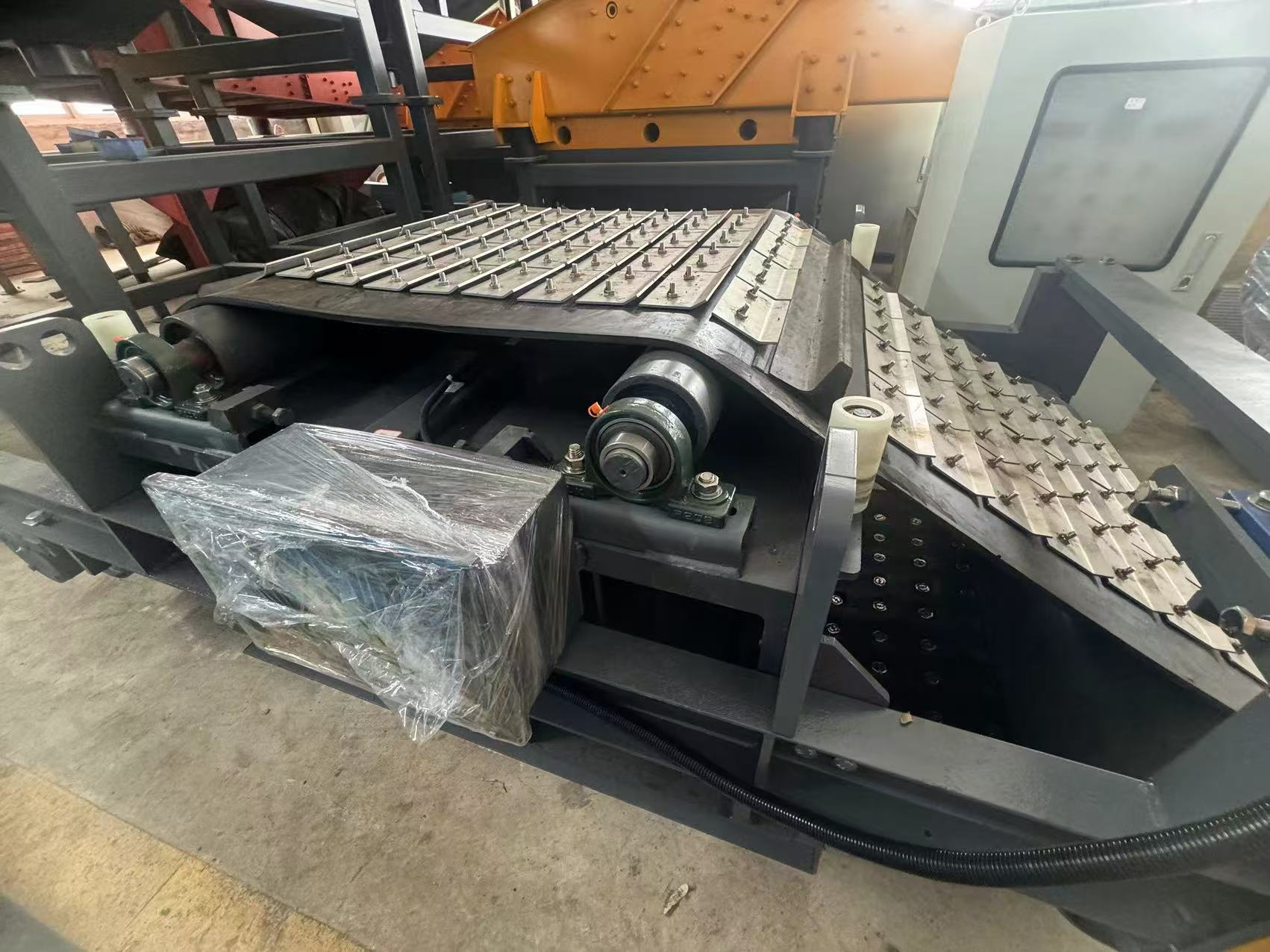
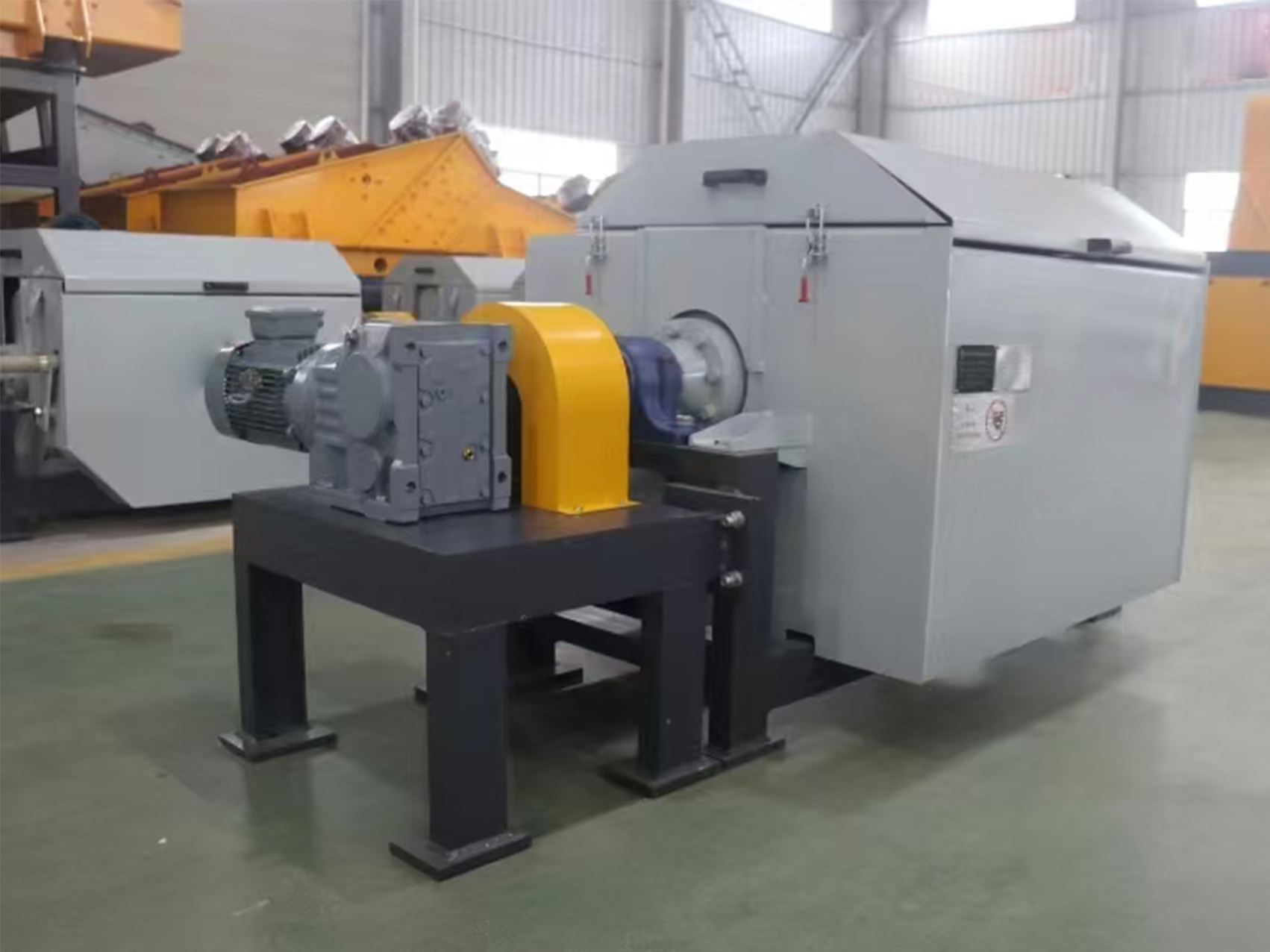
Magnetic Separator for Ferrous Metal Removal
Reliable Ferrous Metal Separation for Recycling Applications
CurrenTek provides magnetic separation equipment designed to remove iron, steel and other magnetically responsive contaminants from mixed recycling materials.
Effective ferrous metal removal is often one of the first important stages in a recycling line. Removing magnetic contaminants before downstream processing can help create a cleaner feed stream, protect subsequent equipment and improve the stability of non-ferrous metal recovery.
CurrenTek offers two primary magnetic field technologies:
- Electromagnetic systems
- Permanent magnet systems
Different structures, magnetic field strengths and installation methods can be selected according to the customer’s material, processing capacity and plant layout.
The objective is not simply to attract metal.
It is to provide a stable ferrous removal stage that supports the performance of the entire recycling process.
Electromagnetic Separation Systems
Electromagnetic equipment generates a magnetic field by energizing internal electrical coils.
When power is supplied, the coils create the required magnetic field. When electrical excitation is removed, the generated field is significantly reduced or eliminated depending on the system design.
One important advantage of electromagnetic technology is the ability to configure or adjust magnetic field strength for different operating requirements.
It can be suitable for applications where:
- Material conditions change
- Adjustable magnetic intensity is required
- A strong magnetic field is needed
- Installation conditions require specific magnetic performance
- Complex recycling materials need controlled ferrous removal
Electromagnetic systems require electrical power for magnetic excitation and should be selected according to the required duty cycle, operating environment and processing conditions.
Permanent Magnet Separation Systems
Permanent magnet equipment uses high-performance magnetic elements arranged to create a stable magnetic field.
The magnetic field itself does not require electrical excitation, making this configuration attractive for applications where stable operation, energy efficiency and low operating complexity are important.
Permanent magnet systems can provide:
- Continuous magnetic force
- Stable long-term operation
- Reduced electrical consumption for magnetic field generation
- Simple operating requirements
- Reliable ferrous metal removal
Depending on the equipment structure, motors may still be required to drive drums, belts or other moving components.
Permanent magnet systems are commonly used in recycling applications where the feed material and required magnetic performance are relatively stable.
Contact and Non-Contact Configurations
Both electromagnetic and permanent magnet technologies can be integrated into different structural arrangements.
Two common configurations are contact-type and non-contact-type systems.
Contact-Type Configuration
In a contact-type arrangement, the material passes directly over or against the active separation surface.
Because the distance between the material and magnetic field source is small, the magnetic force acting on responsive particles can be strong.
This configuration can be suitable when:
- More intensive ferrous removal is required
- Material size is relatively controlled
- Magnetic particles are embedded in mixed material
- A short separation distance is beneficial
- The process requires direct material exposure to the magnetic field
Depending on material conditions, contact-type equipment can help improve the capture of smaller or more difficult magnetic particles.
However, equipment selection must also consider wear, dust, moisture and material abrasiveness.
Non-Contact Configuration
In a non-contact arrangement, the magnetic unit is typically installed above or away from the main material transport surface.
A common example is a suspended unit installed above a conveyor.
As mixed material passes underneath, ferrous particles are attracted away from the main material stream.
This configuration can provide several advantages:
- Reduced direct wear on the magnetic separation surface
- Flexible installation above existing conveyors
- Easier integration into retrofit projects
- Continuous removal of ferrous contaminants
- Reduced contact between the separator and abrasive material
Non-contact systems are widely used as a pre-separation stage before downstream recycling equipment.
Separation performance depends strongly on installation height, magnetic field strength, material depth and particle characteristics.
Drum-Type Ferrous Removal
Drum-type systems use a rotating cylindrical structure containing a magnetic field.
As material passes around or over the drum, magnetic particles are retained by the magnetic field while non-magnetic material follows a different discharge trajectory.
The magnetic material is released after leaving the active magnetic zone.
Drum-type equipment can provide continuous separation and is suitable for many recycling applications requiring stable material flow.
Typical advantages include:
- Continuous operation
- Compact equipment structure
- Stable ferrous recovery
- Integration with feeding and conveying systems
- Suitability for mixed recycling materials
Different drum diameters, working widths and magnetic configurations can be selected according to the required capacity and material characteristics.
Belt-Type Ferrous Removal
Belt-type systems are commonly installed above material conveyors.
Ferrous particles are attracted toward the magnetic field and removed from the main material stream.
A moving discharge belt can continuously transport the collected magnetic material away from the separation area.
This configuration is particularly suitable for:
- Continuous production lines
- High-volume material flow
- Conveyor-based recycling systems
- Large ferrous contaminants
- Existing plant retrofits
Installation height, belt speed, working width and magnetic field strength should be selected according to the actual process.
How Magnetic Separation Works in a Recycling Line
Magnetic separation is normally used before more precise non-ferrous recovery.
A typical process may follow this sequence:
Mixed Recycling Material
↓
Material Size Classification
↓
Ferrous Metal Removal
↓
Non-Ferrous Metal Recovery
↓
Intelligent Upgrading if Required
↓
Recovered Products
Removing iron and steel before the next stage provides a cleaner material stream for downstream processing.
This is particularly important before eddy current separation.
The magnetic system removes ferrous material first.
The eddy current stage can then focus on recovering conductive non-ferrous metals such as aluminum, copper and brass.
These technologies therefore perform different but complementary functions.
Typical Recycling Applications
CurrenTek ferrous removal equipment can be integrated into a wide range of recycling processes.
Zorba Recycling
Shredded non-ferrous material may still contain residual iron or steel.
Removing these contaminants before further upgrading can help produce a cleaner non-ferrous fraction.
ASR Processing
Automotive shredder material can contain:
- Iron
- Steel
- Stainless steel components
- Aluminum
- Copper
- Wire
- Plastic
- Rubber
- Glass
Ferrous removal is typically an important early-stage process before valuable non-ferrous materials are recovered.
UBC Recycling
Mixed beverage-container streams may contain steel cans together with aluminum cans and other packaging.
Magnetic separation can remove steel before aluminum recovery.
IBA Metal Recovery
Incinerator bottom ash may contain both ferrous and non-ferrous metals mixed with mineral material.
Removing magnetic metals first can improve conditions for subsequent non-ferrous recovery.
Plastic Recycling
Metal contamination can damage downstream plastic-processing equipment and reduce final material quality.
Ferrous removal can be used before additional metal separation and plastic purification.
Glass Recycling
Iron and steel contamination can be removed from processed glass streams before further cleaning and non-ferrous recovery.
Mixed Scrap Processing
Mixed recycling material may contain different concentrations and sizes of ferrous metal.
CurrenTek can select an appropriate magnetic configuration according to the actual incoming material.
What About Stainless Steel?
Stainless steel requires special consideration.
Not every stainless steel grade responds strongly to a magnetic field.
Some stainless steels have significant magnetic properties, while others may be only weakly magnetic or effectively non-magnetic under normal separation conditions.
For this reason, CurrenTek does not treat all stainless steel as conventional ferrous material.
For selected applications, high-intensity magnetic configurations may be evaluated for materials with sufficient magnetic response.
If conventional magnetic separation is not suitable, additional intelligent or sensor-based sorting may be considered.
Material testing is recommended when stainless steel recovery is an important project target.
Why Material Conditions Matter
Magnetic separation performance is influenced by more than magnetic field strength.
Important factors include:
Material Size
Large and fine particles respond differently to magnetic forces.
Creating a controlled material size range can improve separation consistency.
Feed Layer Thickness
If the material layer is too deep, magnetic particles buried underneath other material may be more difficult to capture.
Installation Distance
Magnetic force decreases as the distance between the separator and material increases.
Correct installation height is particularly important for suspended systems.
Material Flow Rate
A stable feed rate helps maintain consistent separation performance.
Moisture and Dust
Wet, sticky or heavily contaminated material may behave differently from clean, dry feed.
Particle Shape
Flat, elongated and irregularly shaped pieces can respond differently during separation.
These factors should be considered before selecting equipment.
Multiple Configurations for Different Recycling Plants
CurrenTek offers different equipment arrangements according to project requirements.
Available configurations may include variations in:
- Working width
- Magnetic field strength
- Drum diameter
- Belt width
- Equipment structure
- Installation height
- Contact or non-contact arrangement
- Electromagnetic or permanent magnet technology
- Material discharge method
- Conveyor integration
The correct configuration should be based on actual process requirements rather than selecting equipment only by nominal capacity.
Customized Equipment Selection
Before recommending a system, CurrenTek evaluates the customer’s material and production conditions.
Useful project information includes:
- Material type
- Material photos
- Material videos
- Material samples
- Material size range
- Required processing capacity
- Estimated ferrous content
- Moisture condition
- Dust level
- Required removal efficiency
- Existing production-line layout
- Downstream sorting equipment
For complex materials, testing can help determine the most suitable magnetic field configuration and installation arrangement.
Integration with CurrenTek Recycling Systems
CurrenTek can provide ferrous removal equipment as an individual machine or as part of a complete recycling sorting system.
A complete process can include:
Feeding
↓
Material Size Classification
↓
Ferrous Metal Removal
↓
Non-Ferrous Metal Recovery
↓
AI Intelligent Sorting
↓
Final Material Upgrading
Each technology performs a different function.
The goal is to create a practical process in which each separation stage prepares the material for the next.
Why Choose CurrenTek?
CurrenTek focuses on practical recycling solutions designed around actual material conditions.
Our equipment configurations can be selected according to different feed materials, capacities, plant layouts and recovery requirements.
We provide:
- Electromagnetic configurations
- Permanent magnet configurations
- Contact-type structures
- Non-contact structures
- Drum-type systems
- Belt-type systems
- Multiple working widths
- Different magnetic field strengths
- Customized installation arrangements
The objective is not simply to provide stronger magnetic force.
It is to provide the appropriate magnetic separation solution for the actual recycling process.
For equipment selection, please send CurrenTek your material type, material size range, required processing capacity, estimated ferrous content and plant layout information.