


Trommel Screen for Recycling Material Size Classification
Stable Material Sizing for More Efficient Downstream Sorting
The CurrenTek Trommel Screen is designed to classify mixed recycling materials into controlled size ranges before downstream sorting and recovery.
In many recycling plants, incoming material contains pieces with significantly different dimensions. Large pieces, medium-sized material and fine fractions can behave very differently during subsequent separation.
If all material enters the next sorting stage together, separation efficiency may become unstable.
The purpose of the Trommel Screen is therefore not simply to “screen material.”
Its more important function is to create a more consistent and controlled feed condition for downstream recycling equipment.
By dividing mixed material into suitable size ranges, the system can help improve:
- Feed stability
- Separation consistency
- Metal recovery performance
- Downstream equipment utilization
- Process control
- Final product quality
The appropriate screen opening, equipment size and process arrangement are selected according to the customer’s actual material and recycling target.
How a Trommel Screen Works
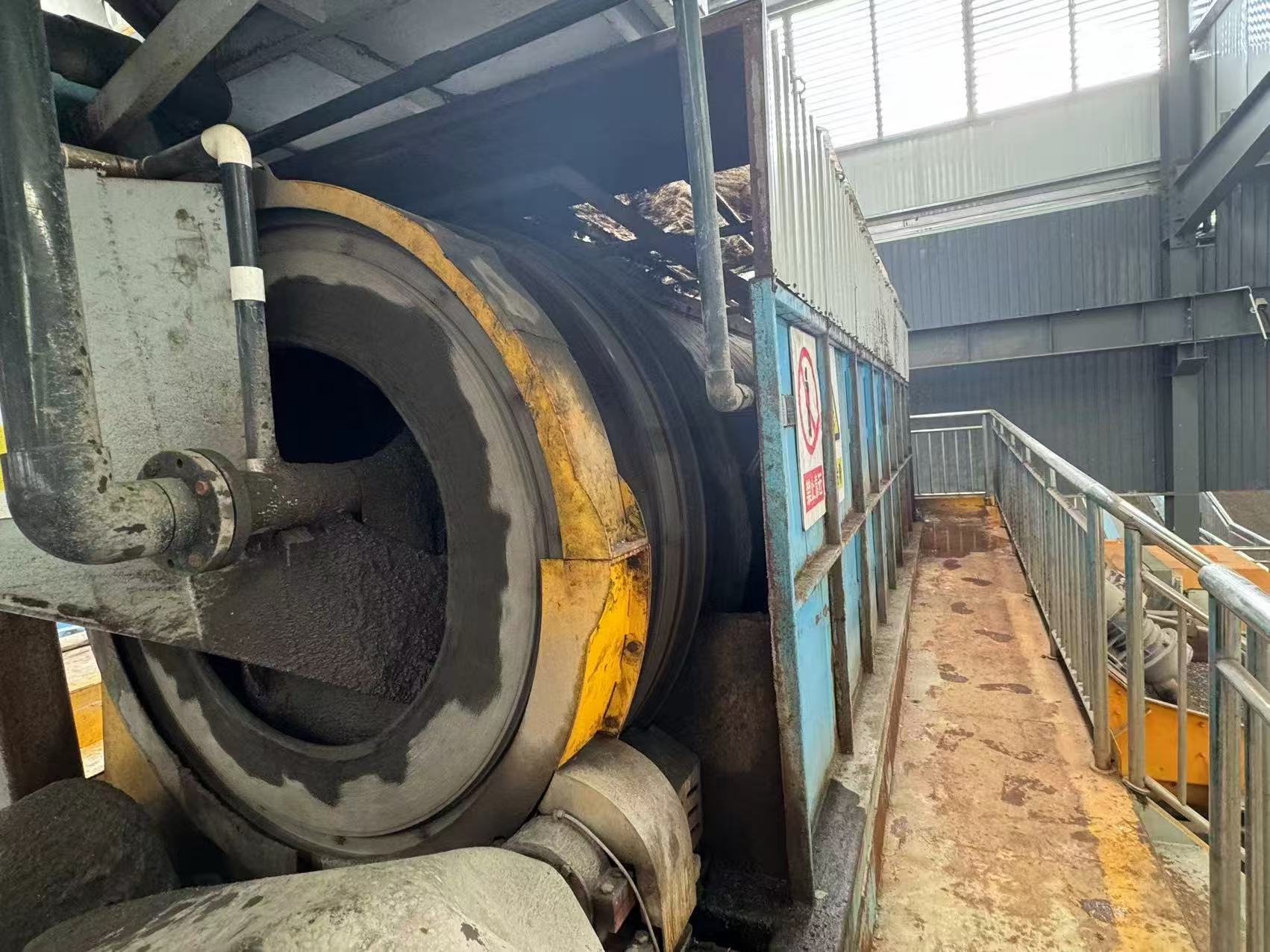
The Trommel Screen uses a rotating cylindrical drum fitted with selected screen openings.
As material enters the rotating drum, it is continuously lifted, turned and distributed.
Material smaller than the selected opening passes through the screen, while larger pieces continue through the drum and discharge separately.
Depending on the process design, one unit can be configured to produce different material size fractions.
The result is a more controlled material stream that can be directed to the appropriate downstream recovery stage.
For example:
Mixed Recycling Material
↓
Trommel Size Classification
↓
Fine Fraction / Medium Fraction / Oversize Fraction
↓
Different Downstream Sorting Processes
This allows each material size range to be processed under conditions that better match its physical characteristics.
Why Material Size Classification Matters
Material size has a major influence on recycling performance.
A 10 mm aluminum particle and a 100 mm aluminum piece may contain the same metal, but they do not behave the same way during mechanical separation.
If very different material sizes are processed together, several problems can occur:
- Small particles may be hidden underneath larger pieces
- Material distribution may become uneven
- Separation trajectories may become inconsistent
- Valuable fine metal may be lost
- Large pieces may interfere with downstream equipment
- Sorting capacity may become difficult to control
Size classification helps reduce these problems.
A more uniform feed allows downstream equipment to operate under more stable conditions.
This is particularly important before processes involving:
- Ferrous metal removal
- Non-ferrous metal recovery
- Intelligent material sorting
- Fine metal recovery
- Additional material upgrading
For this reason, the Trommel Screen is often positioned near the beginning of a recycling process.
Fully Enclosed Design
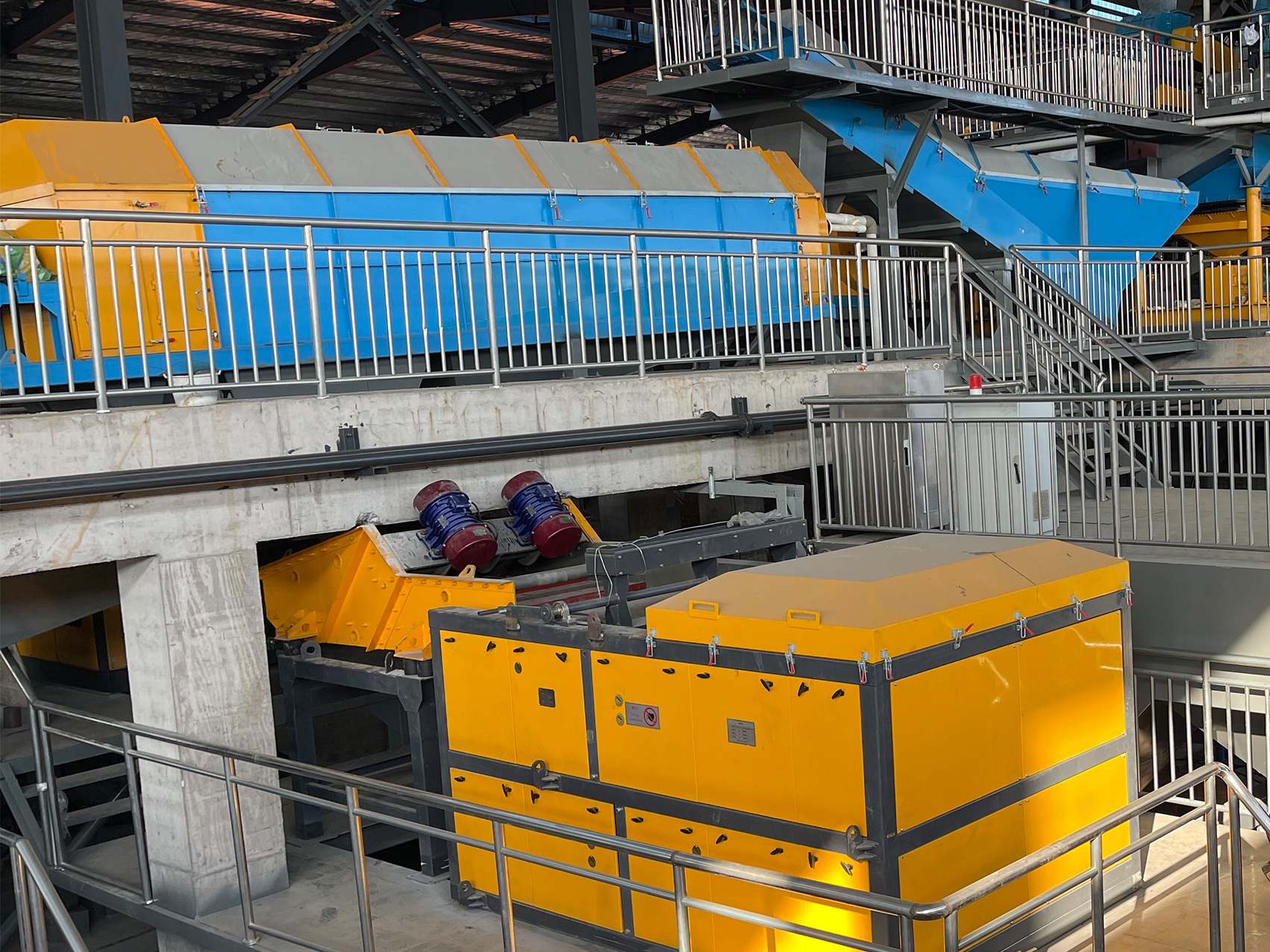
CurrenTek Trommel Screens use a fully enclosed structure to improve operating conditions in recycling plants.
Mixed recycling material can generate significant dust during movement and classification.
An enclosed structure helps contain airborne material and reduces unnecessary dust dispersion around the working area.
This can provide several practical benefits:
- Cleaner surrounding work area
- Reduced material escape
- Better control of dust
- Improved integration with dust collection systems
- Reduced cross-contamination between nearby processing areas
The enclosure also provides additional physical protection around the rotating screening section.
Standard Cleaning System
Screen openings can gradually become blocked when processing difficult material.
This is especially common when the feed contains:
- Dust
- Fine particles
- Wet material
- Sticky material
- Fibrous material
- Agglomerated material
Blocked openings reduce effective screening area and can change the size distribution of the final product.
CurrenTek Trommel Screens therefore include a screen cleaning device as standard.
The cleaning system helps maintain open screening area during continuous operation and reduces the need for frequent manual cleaning.
This supports more stable long-term material classification.
Optional Washing System
For materials containing significant dirt, dust or surface contamination, a washing system can be added according to project requirements.
Washing can help remove loose contamination before the material enters subsequent recycling stages.
This may be useful for certain applications involving:
- Dirty post-consumer material
- Mineral contamination
- IBA
- Contaminated mixed scrap
- Glass recycling material
- Other feed streams requiring additional cleaning
The need for washing should be evaluated according to the actual material.
Not every recycling project requires a washing stage.
CurrenTek recommends the simplest process capable of achieving the required downstream result.
Two Installation Methods
Different recycling plants have different space limitations and production-line layouts.
CurrenTek therefore supports two main installation arrangements.
Elevated Mounting
The Trommel Screen can be installed above downstream sorting equipment.
After size classification, material is transferred to the next stage using gravity.
This arrangement can reduce the number of conveyors required and create a compact vertical process layout.
Elevated mounting is particularly suitable when:
- Plant height is available
- Floor space is limited
- Gravity transfer is practical
- The recycling line is being designed as a new integrated system
Conveyor Linkage
The Trommel Screen can also discharge material onto conveyors that transport each size fraction to downstream equipment.
This arrangement offers greater flexibility in equipment placement.
It is particularly useful when:
- Existing plant layout must be retained
- Equipment is installed at different locations
- Different material fractions need to travel to different processing stages
- A retrofit project requires flexible routing
The correct arrangement depends on available plant space, material flow and downstream equipment configuration.
Typical Applications
CurrenTek Trommel Screens can be integrated into a variety of recycling processes.
Zorba Processing
Shredded non-ferrous material can contain pieces with a wide size distribution.
Classification before downstream recovery can help create more stable material fractions for additional metal separation.
ASR Recycling
Automotive shredder material may contain metal, plastic, rubber, glass, wire and other components in different sizes.
Separating these materials into controlled size ranges can improve subsequent processing.
IBA Recycling
Incinerator bottom ash frequently contains both larger metal pieces and fine non-ferrous particles.
Size classification is especially important because fine and coarse fractions normally require different recovery conditions.
Mixed Scrap
Mixed recycling streams can contain irregular material with significant differences in size and shape.
A Trommel Screen provides a practical first-stage classification process before metal recovery.
Construction and Demolition Waste
Material containing metal, plastic, wood, glass and mineral components can be classified before additional sorting.
Plastic and Glass Recycling
Material size control can help stabilize downstream processing when metal contamination must later be removed.
Designed Around the Actual Material
There is no single screen configuration suitable for every recycling project.
Before selecting a Trommel Screen, CurrenTek evaluates several important factors:
- Material type
- Material size distribution
- Required output size ranges
- Required processing capacity
- Moisture level
- Dust level
- Material density
- Sticky or agglomerated material
- Available installation space
- Upstream equipment
- Downstream sorting process
Screen opening size should be selected according to the required downstream separation target.
The objective is not simply to divide the material into as many sizes as possible.
The objective is to create the size ranges that provide the greatest value to the complete recycling process.
Integration with a Complete Recycling Line
A typical recycling system may follow this process:
Mixed Material
↓
Stable Feeding
↓
Material Size Classification
↓
Ferrous Metal Removal
↓
Non-Ferrous Metal Recovery
↓
Intelligent Upgrading if Required
↓
Recovered Products
In this process, the Trommel Screen provides the foundation for more stable downstream operation.
When material is correctly classified before subsequent separation, each downstream stage can be configured specifically for the material size it receives.
This can help improve overall recovery performance while avoiding unnecessary processing.
Multiple Configurations for Different Capacities
Different recycling plants operate at different throughput levels.
CurrenTek can configure the Trommel Screen according to the customer's required production capacity and material conditions.
Important design considerations include:
- Drum diameter
- Drum length
- Screen opening
- Number of size fractions
- Feed rate
- Material retention time
- Installation angle
- Rotation speed
- Cleaning requirements
- Washing requirements
- Discharge arrangement
Final equipment selection should therefore be based on actual production conditions rather than using a standard machine size for every project.
What Information Should Customers Provide?
To recommend a suitable configuration, CurrenTek asks customers to provide basic information about the material and project.
Useful information includes:
- Material photos
- Material videos
- Material samples
- Minimum and maximum material size
- Required final size ranges
- Required capacity per hour
- Moisture condition
- Dust level
- Material composition
- Available plant layout
- Downstream sorting equipment
This information allows the system to be configured around the complete recycling process.
CurrenTek Recycling Size Classification Solutions
CurrenTek provides Trommel Screens as individual equipment or as part of complete recycling sorting systems.
The equipment can be integrated with feeding, conveying, ferrous removal, non-ferrous recovery and intelligent sorting stages according to the customer's material and plant conditions.
Our objective is not simply to screen material.
It is to create more stable feed conditions for the entire downstream recycling process.
Correct material size classification can help recyclers:
improve separation consistency, reduce valuable material loss, stabilize processing capacity and recover more value from complex recycling streams.
For equipment selection or recycling line configuration, please send CurrenTek your material type, material size distribution, required output sizes and processing capacity.